
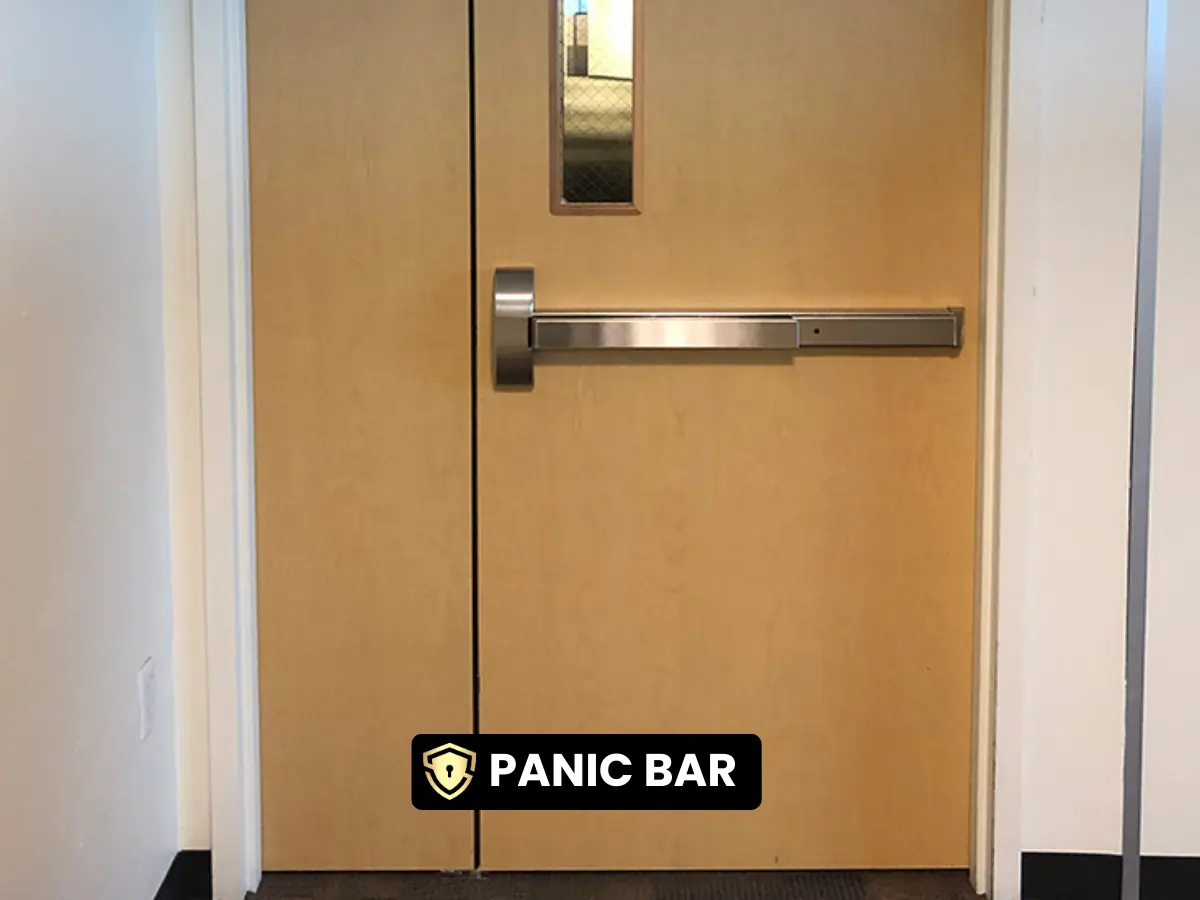
Fire codes exist to save lives, and panic bars are a critical component of fire safety in commercial buildings. These horizontal bars across exit doors allow people to escape quickly during emergencies simply by pushing. Near Me Locksmith, LLC installs and services panic hardware throughout Denton, TX.
Proper panic bar installation ensures your building meets fire safety requirements while maintaining security during normal operations.
Types of Panic Hardware
Rim Exit Devices – Surface-mounted on the door, easiest to install, and most common type for standard commercial applications.
Mortise Exit Devices – Integrated with mortise lock bodies, common in commercial buildings with existing mortise preparations.
Vertical Rod Exit Devices – Rods extend into frame at top and bottom, securing at multiple points, ideal for double doors.
Concealed Vertical Rod – Rods hidden inside the door for cleaner appearance while maintaining security and functionality.
Alarmed Panic Bars – Include alarms that sound when doors open, preventing theft via emergency exits.
Fire-Rated Devices – Special panic bars for fire-rated doors maintaining fire protection ratings and marshal approval.
Delayed Egress – Hold doors locked 15-30 seconds (with alarm) before releasing, preventing unauthorized exit while maintaining safety.
Key Features and Security
The challenge with emergency exits is maintaining security during normal operations while ensuring safe egress during emergencies. Modern panic hardware addresses this with important features.
Dogging holds the latch open during business hours for free passage. Outside key cylinders allow authorized entry from the exterior while maintaining free egress from inside.
Delayed egress devices hold doors locked for 15 to 30 seconds after the panic bar is pushed, sounding an alarm during the delay, then releasing. Fire alarm activation or power failure immediately releases these systems.
Common Applications
Schools and Education – Classroom hallway exits and emergency doors requiring quick evacuation capability for student safety.
Retail Stores – Back exit doors and employee entrances balancing theft prevention with emergency egress requirements.
Office Buildings – Stairwell exits and emergency egress points meeting fire codes for multi-story commercial buildings.
Restaurants – Kitchen exits and back-of-house egress for staff safety during fires or other emergencies.
Warehouses – Emergency exits and personnel doors in industrial settings with specific OSHA safety requirements.
Churches and Venues – Sanctuary and assembly space exits for large occupancy areas requiring multiple egress points.
Medical Facilities – Hospital exits, clinic doors, and patient areas requiring safe evacuation capability with security.
Installation Requirements
Proper installation is critical for both code compliance and reliable function during emergencies. We mount panic bars at the correct height between 34 and 48 inches from the floor, ensure appropriate door clearances, align strikes perfectly for smooth operation, and maintain operating force within code requirements.
All installations use UL-listed, code-compliant hardware from manufacturers like Von Duprin, Dorma, Yale, and Falcon—companies that design panic hardware to meet stringent safety testing standards.
Maintenance and Testing
Building codes require regular panic bar testing to ensure they’ll function during emergencies. We provide testing and certification services including function testing of all components, alarm system verification, lubrication and adjustment, and annual certification documentation for building inspections.
Malfunctioning exit devices create immediate life safety violations, and we provide emergency service for any panic hardware issues.
Ensure safe emergency egress with professional panic bars. Call Near Me Locksmith, LLC at 469-252-1756 for panic bar installation in Denton, TX.
David Collyer
Verified Google Review
Eric was awesome. He arrived when he said he would and got me back into my business in minutes. Great experience.
Johnny Phillips
Verified Google Review
Eric was great, got me in quickly and handled the lock issue very fast. Very professional service and highly recommended.
Sonny Martinez
Verified Google Review
They were very quick and professional. I highly recommend them if you need help with any lock or door issue.