
Is your door lock feeling loose or becoming difficult to turn? If you’re wondering how long door locks last and whether it’s time for a repair or replacement, understanding the expected lifespan of different lock types can help you make the right decision.
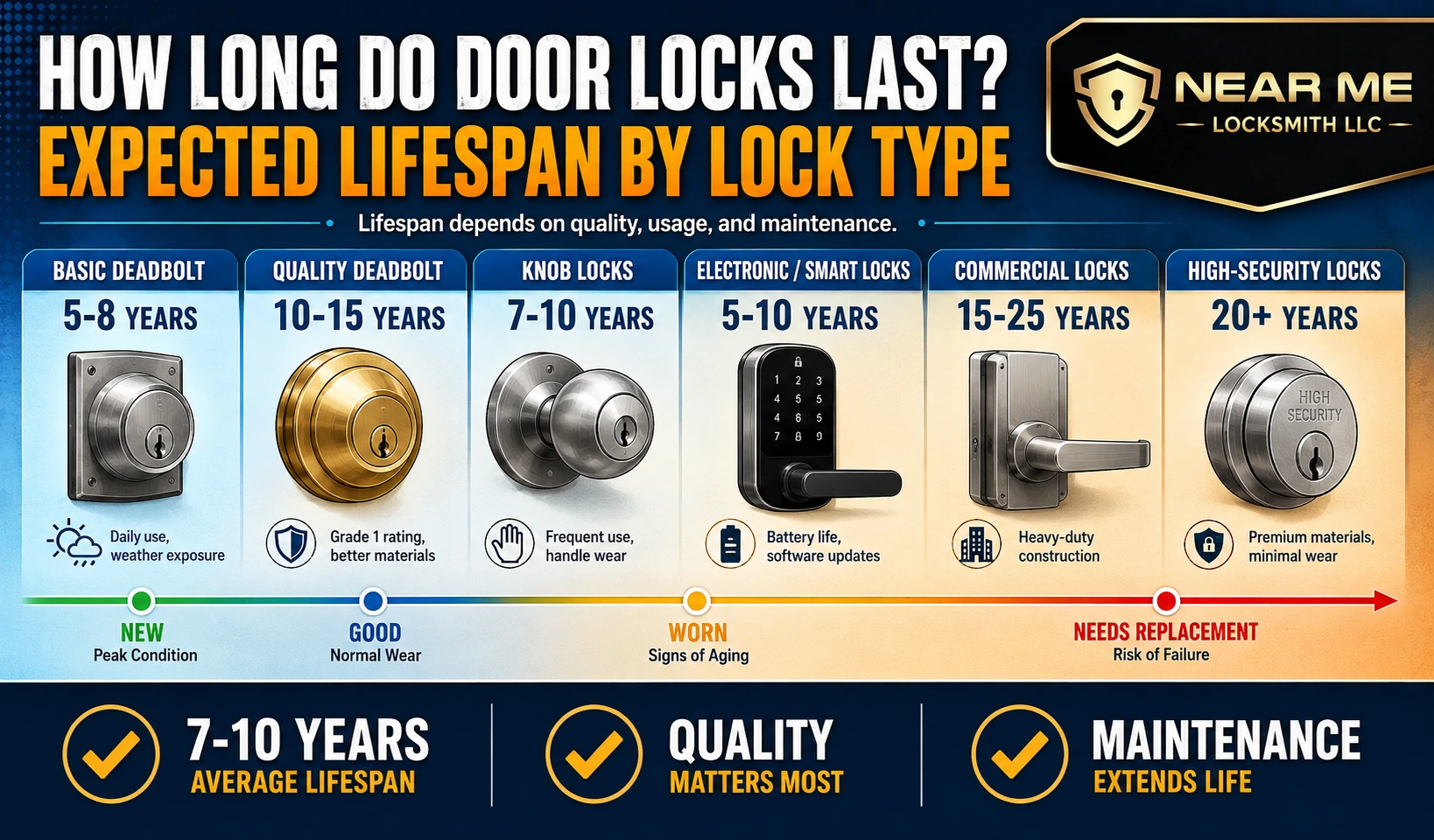
Most residential door locks last 7 to 10 years with normal use, although their lifespan depends on the lock type, build quality, maintenance, and daily usage. High-quality locks can provide reliable security for well over a decade when properly maintained.
Door Lock Lifespan by Type
| Lock Type | Expected Lifespan | Factors Affecting Longevity |
|---|---|---|
| Basic Deadbolt | 5-8 years | Daily use, weather exposure |
| Quality Deadbolt | 10-15 years | Grade 1 rating, better materials |
| Knob Locks | 7-10 years | Frequent use, handle wear |
| Electronic/Smart Locks | 5-10 years | Battery life, software updates |
| Commercial Locks | 15-25 years | Heavy-duty construction |
| High-Security Locks | 20+ years | Premium materials, minimal wear |
Regular inspections and proper maintenance can significantly extend the life of your door lock while helping you avoid unexpected lock failures.
Signs Your Lock Needs Replacement
I’ve seen locks that technically “work” but should have been replaced years ago. Here are the clear warning signs:
Mechanical Issues
- Key sticks or requires jiggling to turn
- Lock cylinder feels loose or wobbly
- Deadbolt doesn’t fully extend into the strike plate
- Door handle or knob turns but doesn’t engage the latch
Security Compromises
- Visible wear on the lock face or keyway
- Lock can be bumped or picked easily
- Previous break-in attempts left damage
- Keys have been lost or stolen
Age-Related Wear
If you notice more than one of these warning signs, it’s a good idea to have your lock inspected before it fails completely.
- Lock is over 10 years old and showing any problems
- Finish is severely worn or corroded
- Internal components make grinding sounds
If you’re experiencing key problems specifically, sometimes it’s the lock cylinder causing issues rather than the entire lock assembly.
What Shortens Lock Lifespan
Some locks die young, and it’s usually not random. Here’s what kills them early:
Weather Exposure
Texas weather is brutal on locks. The combination of heat, humidity, and occasional freezes causes metal expansion and contraction that wears out internal components faster than you’d expect.
Rain, dust, humidity, and extreme temperature changes can gradually affect internal lock components, making regular maintenance even more important.
Overuse
A front door lock that gets used 10+ times daily will wear out much faster than a rarely-used back door lock. Commercial locks handle this better because they’re built for heavy use.
Poor Installation
When a lock isn’t properly aligned with the strike plate, it fights itself every time you use it. This constant stress can cut the lifespan in half.
Lack of Maintenance
Regular cleaning, proper lubrication, and routine inspections help reduce wear and keep your lock operating smoothly for many years.
Most people ignore them until they stop working, then wonder why they only lasted 3 years.
How to Extend Your Lock’s Life
I tell customers that proper maintenance can easily double a lock’s lifespan. Here’s what actually works:
- Lubricate annually with graphite or 3-in-1 oil (never WD-40 in the keyway)
- Clean the lock face and keyway every few months
- Check alignment between deadbolt and strike plate
- Don’t force keys or over-tighten during installation
- Replace worn keys before they damage the lock cylinder
Scheduling a professional lock inspection every few years can help identify worn parts before they lead to expensive repairs or complete lock failure.
For comprehensive maintenance and upgrades, our residential locksmith services include lock inspection and tune-ups that can identify problems before they cause failures.
When NOT to Replace Your Lock
Here’s some honest advice: don’t come to us if your lock just needs a simple adjustment or lubrication. If the key turns smoothly and the deadbolt engages properly, you’re probably fine for several more years.
Also, if you’re planning to renovate or change your door within the next year, wait. New doors often require different lock specifications, and you might end up buying twice.
A professional locksmith can quickly determine whether a simple adjustment, rekeying, repair, or full replacement is the most cost-effective solution.
Replacement vs. Repair Costs
A basic lock replacement runs $150-250 including labor. Lock repair is usually $75-125, but it’s only worth it if the lock is less than 8 years old and the problem is minor.
For locks over 10 years old, replacement makes more sense. The labor cost is similar, and you get a fresh warranty period plus improved security features.
Choosing repair or replacement depends on the condition of the lock, repair costs, and the level of security you want for your home.
Frequently Asked Questions
Can I tell how old my lock is?
Most locks don’t have visible date codes, but the style and finish can give you clues. Brass locks with a bright, shiny finish are typically newer, while darker, weathered finishes suggest age. If you bought the house recently, ask the previous owner or check home inspection reports.
Do smart locks last as long as traditional locks?
Not usually. Smart locks have more moving parts and electronic components that can fail. Battery replacement every 6-12 months is normal, and firmware updates eventually stop for older models. Plan on 5-8 years for most smart locks.
Should I replace all locks at once?
If they’re all the same age and brand, yes. It’s more cost-effective to do them together, and you can get matching keys. But if only one lock is having problems, there’s no need to replace working locks.
How do I know if my lock is worth repairing?
If the lock is under 7 years old and the repair cost is less than half the replacement cost, repair makes sense. For older locks or expensive repairs, replacement is usually the better choice.
Do higher-grade locks really last longer?
Absolutely. Grade 1 locks use better materials and tighter manufacturing tolerances. They cost more upfront but often last twice as long as Grade 3 builder-grade locks. For frequently-used doors, the extra cost pays for itself.
If your locks are showing signs of wear or you’re not sure about their condition, give us a call at (469) 252-1756. We’ll take a look and give you an honest assessment of whether you need replacement, repair, or just some basic maintenance.