
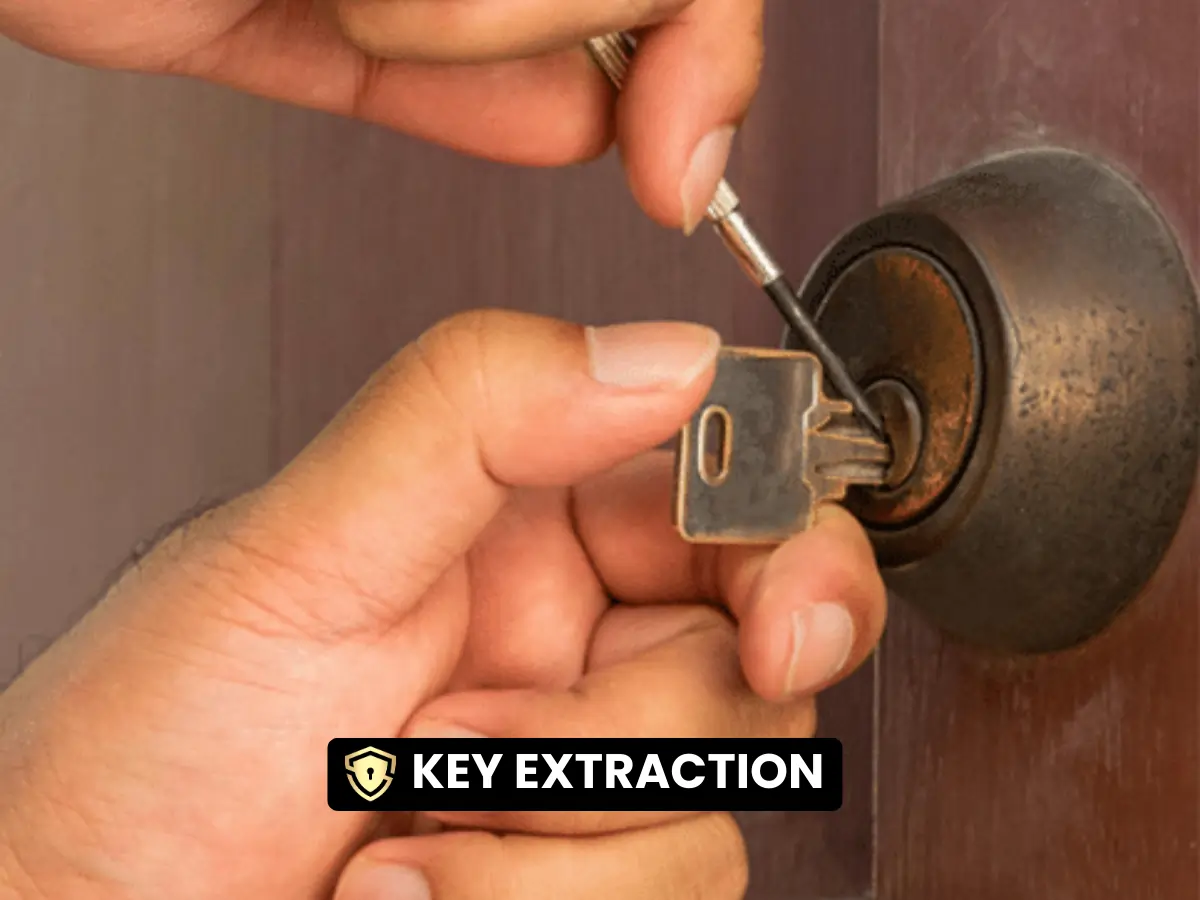
A broken key stuck in a lock is frustrating and concerning. Whether it snapped due to wear, excessive force, or a faulty key, you need professional extraction to regain access without damaging your lock. Near Me Locksmith, LLC provides expert key extraction services for residential, commercial, and automotive locks throughout Denton, TX.
Our skilled locksmiths use specialized tools and techniques to safely remove broken keys while preserving your lock’s functionality.
Why Keys Break in Locks
Understanding why keys break can help prevent future incidents:
Worn Keys: Over time, keys develop grooves and thin spots that weaken the metal. Eventually, the worn key can snap under normal use.
Worn Locks: Internal lock components wear down, creating additional friction and pressure on the key.
Excessive Force: Forcing a key that isn’t turning smoothly puts stress on the metal and can cause it to snap.
Temperature Extremes: Cold weather makes metal more brittle. Keys are more likely to break in winter, especially on exterior locks.
Poor Quality Keys: Inexpensive duplicate keys made from soft metal are more prone to breaking than quality blanks.
Misaligned Locks: When locks are misaligned, keys must be turned with extra force, increasing break risk.
Corrosion: Rust or corrosion weakens key metal and can cause unexpected breaks.
Our Key Extraction Process
Assessment: We examine the situation to determine how much of the key is visible and accessible.
Lock Lubrication: We apply specialized lubricant to reduce friction and help ease the broken piece out.
Extraction: Using professional extraction tools, we carefully remove the broken key fragment without damaging the lock pins or cylinder.
Verification: After extraction, we test the lock to ensure it functions properly.
Key Replacement: We cut a new key from the extracted pieces or from code if necessary.
Specialized Extraction Tools
Professional locksmiths use tools designed specifically for key extraction:
- Broken key extractors: Thin metal tools with hooks that grab the broken key fragment
- Tweezers and picks: For keys broken flush with the lock face
- Spiral extractors: Screw into the broken key to pull it out
- Magnets: Effective for certain types of keys
- Pliers: For keys with substantial fragments extending from the lock
These specialized tools allow us to remove broken keys without dismantling or damaging your locks.
What NOT to Do with a Broken Key
If you have a broken key in a lock, avoid these common mistakes:
Don’t Force It: Attempting to turn the remaining key piece or forcing it further into the lock worsens the situation.
Don’t Use Super Glue: Trying to glue the key back together rarely works and often makes professional extraction much harder.
Don’t Use Improvised Tools: Paperclips, tweezers, or other makeshift tools usually push the fragment deeper into the lock.
Don’t Remove the Lock: In most cases, extraction is possible without removing the entire lock cylinder.
Don’t Spray WD-40: While lubricants can help, some products leave residues that attract dust and can gum up lock mechanisms.
Locks We Extract Keys From
We extract broken keys from all types of locks:
- Residential door locks and deadbolts
- Commercial door locks
- Padlocks
- Mailbox locks
- Filing cabinet and desk locks
- Automotive door and ignition locks
- Motorcycle locks
- Garage door locks
- Gate locks
- Storage unit locks
Preventing Future Key Breaks
After we extract your broken key and provide a replacement, follow these tips to prevent recurrence:
Regular Lubrication: Lubricate locks annually with graphite or silicone-based lubricants to reduce friction.
Quality Keys: Invest in quality duplicate keys from professional locksmiths rather than cheap copies.
Gentle Operation: If a key doesn’t turn smoothly, don’t force it. Call a locksmith to diagnose the problem.
Key Inspection: Regularly check keys for wear, cracks, or bending. Replace worn keys before they break.
Lock Maintenance: Have locks serviced periodically to ensure proper alignment and operation.
Weather Protection: Apply lock de-icer in winter and keep exterior locks protected from moisture.
When Extraction Isn’t Possible
In rare cases, broken keys are lodged so deeply or the lock is so damaged that extraction isn’t feasible. When this happens, we recommend:
- Lock replacement
- Cylinder replacement
- Lock disassembly and repair
We always attempt extraction first, as it’s the least invasive and most cost-effective solution.
Emergency Key Extraction
Broken keys create urgent situations—you might be locked out of your home, unable to access your vehicle, or prevented from securing your business. We understand the urgency and respond promptly to extraction emergencies.
Our locksmiths carry complete extraction tool sets and can handle extractions on-site in most situations.
Key Extraction for Different Lock Types
Pin Tumbler Locks: The most common type. Extraction is usually straightforward with proper tools.
Wafer Locks: Common in vehicles and cabinets. These require careful technique to avoid damaging wafers.
Tubular Locks: Round keys that can break in circular locks. Require specialized extraction methods.
High-Security Locks: These feature hardened components that make extraction more challenging but still achievable.
Cost of Key Extraction
Extraction cost depends on:
- Lock type and accessibility
- How deeply the key is lodged
- Whether the lock is damaged
- Time of service (emergency vs. standard)
- Additional services needed (rekeying, new keys, etc.)
In most cases, extraction is much more affordable than complete lock replacement.
After Extraction Service
Once we extract your broken key, we:
- Inspect the lock for damage or excessive wear
- Recommend repairs or replacement if necessary
- Cut new keys from the extracted pieces
- Test the new keys to ensure proper operation
- Provide advice on preventing future breaks
Have a broken key stuck in a lock? Don’t struggle with it—call the professionals. Contact Near Me Locksmith, LLC at 469-252-1756 for fast, expert key extraction services in Denton, TX.
Customers across Denton trust Near Me Locksmith when they need fast and reliable key extraction services. Whether a key breaks inside a lock or gets stuck in the ignition, our technicians respond quickly and remove the broken key safely without damaging the lock. Here are a few reviews from customers who recently used our locksmith services.
Heather
Verified Google ReviewMy key came apart from the fob and I needed help quickly. Eric called back right away and came to my location. He removed the broken piece and made a new key for me at a great price. Very professional service.
Ruel Sarmiento
Verified Google ReviewOur lock wasn’t working and we couldn’t get the key out. After trying for a while we decided to call them. They arrived quickly, removed the stuck key, and fixed the issue right away.
Edgar Aviles
Verified Google ReviewAmazing service. They helped me remove a broken key from my car lock quickly and without damaging anything. Very fair price and great customer service.