
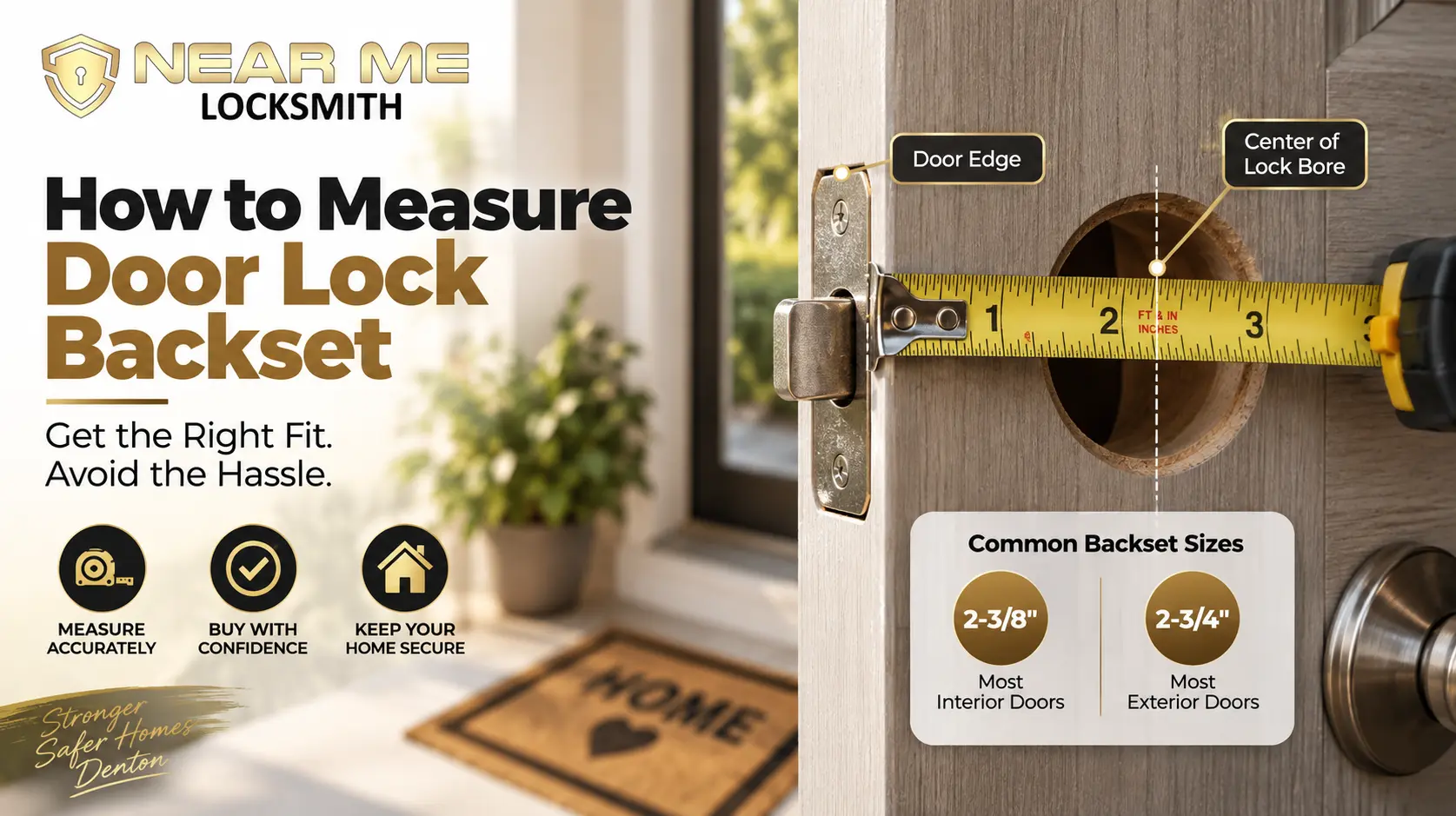
Buying a replacement lock without knowing your backset measurement is one of the fastest ways to end up with hardware that doesn’t fit. The backset is the distance from the edge of your door to the center of the lock bore, and getting it wrong means a second trip to the hardware store or waiting for another shipment.
Here’s how to measure your door lock backset correctly, what measurements you’ll find on most residential doors, and why this number matters more than you’d think.
What Is a Door Lock Backset?
The backset is the horizontal distance from the edge of the door to the center of the round hole drilled for the lock cylinder. This measurement determines where the lock body sits inside the door and where the latch engages the strike plate on the frame.
Most residential doors use one of two standard backsets:2-3/8 inches or 2-3/4 inches. Commercial doors and older homes sometimes use different measurements, but those two cover the majority of doors you’ll encounter in Denton.
If you install a lock with the wrong backset, the latch won’t align with the strike plate. The door won’t latch properly, or worse, the lock won’t fit the existing holes in your door at all.
How to Measure Your Door Lock Backset
Measuring from the Door Edge
The easiest way to measure backset is with the lock already installed. Open the door and look at the latch on the edge. You’ll see a small faceplate, measure from the edge of the door to the center of the lock cylinder hole. That’s your backset.
Use a tape measure and take the measurement in inches. Round to the nearest 1/8 inch if needed, but most residential locks will land exactly on 2-3/8″ or 2-3/4″.
Measuring Without the Lock Installed
If you’ve already removed the old lock, measure from the door edge to the center of the large round bore. The bore is the main hole drilled through the door face for the lock body. Make sure you’re measuring to the center of the hole, not the edge closest to you.
Checking the Old Lock
If you still have the old lock, flip it over. Many manufacturers stamp the backset measurement on the latch faceplate or the lock body itself. Look for “2-3/8” or “2-3/4” — it saves you from measuring at all.
Common Backset Sizes and Where They’re Used
Here’s where you’ll typically find each backset measurement:
- 2-3/8 inches: Standard on interior doors, bedroom doors, bathroom doors, and most residential entry doors in newer construction.
- 2-3/4 inches: Common on exterior doors, older homes, and some commercial applications where the door is thicker or the frame is set deeper.
- 5 inches: Occasionally used on commercial storefront doors or older mortise locks, but rare in residential settings.
Other Measurements You’ll Need
Backset isn’t the only measurement that matters when replacing a lock. Here’s what else to check before you buy new hardware:
Door Thickness
Measure the thickness of your door from face to face. Standard residential doors are 1-3/8 inches (interior) or 1-3/4 inches (exterior). Most locks are adjustable for both, but check the product specs to be sure.
Bore Hole Diameter
The large round hole drilled through the door face is usually 2-1/8 inches in diameter. Measure across the hole to confirm. Some older locks use a 1-1/2 inch bore, which limits your replacement options unless you enlarge the hole.
If you’re upgrading locks on an older Denton home, you may run into non-standard measurements that require drilling or filling old holes.
Common Mistakes When Measuring Backset
Here’s where people go wrong:
- Measuring from the wrong edge — always measure from the door edge, not from the trim or doorframe.
- Measuring to the edge of the bore instead of the center — the backset is always measured to the center point.
- Assuming all locks are the same — interior and exterior locks often use different backsets even in the same house.
- Rounding incorrectly — 2-3/8″ and 2-3/4″ are only 3/8″ apart. A careless measurement will get you the wrong lock.
If your lock feels loose or isn’t latching correctly, the backset might not be the only problem, but it’s one of the first things to check.
When to Just Call a Locksmith
If you’ve measured twice and you’re still not confident, don’t guess. Buying the wrong lock wastes time and money, and forcing an incompatible lock into a door can damage the holes or the frame.
If your door has non-standard dimensions, the old lock was custom-installed, or you’re dealing with a commercial-grade setup, it’s worth having a locksmith take a look before you order anything.
FAQ
What happens if I install a lock with the wrong backset?
The latch won’t line up with the strike plate on the doorframe. The door won’t close properly, won’t latch, or the lock won’t fit the existing holes at all. You’ll need to return the lock or drill new holes in the door.
Can I change the backset on an existing lock?
No. The backset is determined by the lock body design and the position of the holes drilled in your door. You have to buy a lock that matches your door’s existing backset, or you’ll need to redrill the door.
Ready to get started in Denton?
Near Me Locksmith, LLC is here to help with how to measure door lock backset in Denton. Reach out today, and we’ll walk you through your options, answer your questions, and book a time that works for you.
Call (469) 252-1756 or visit Near Me Locksmith, LLC to schedule your Denton appointment.