
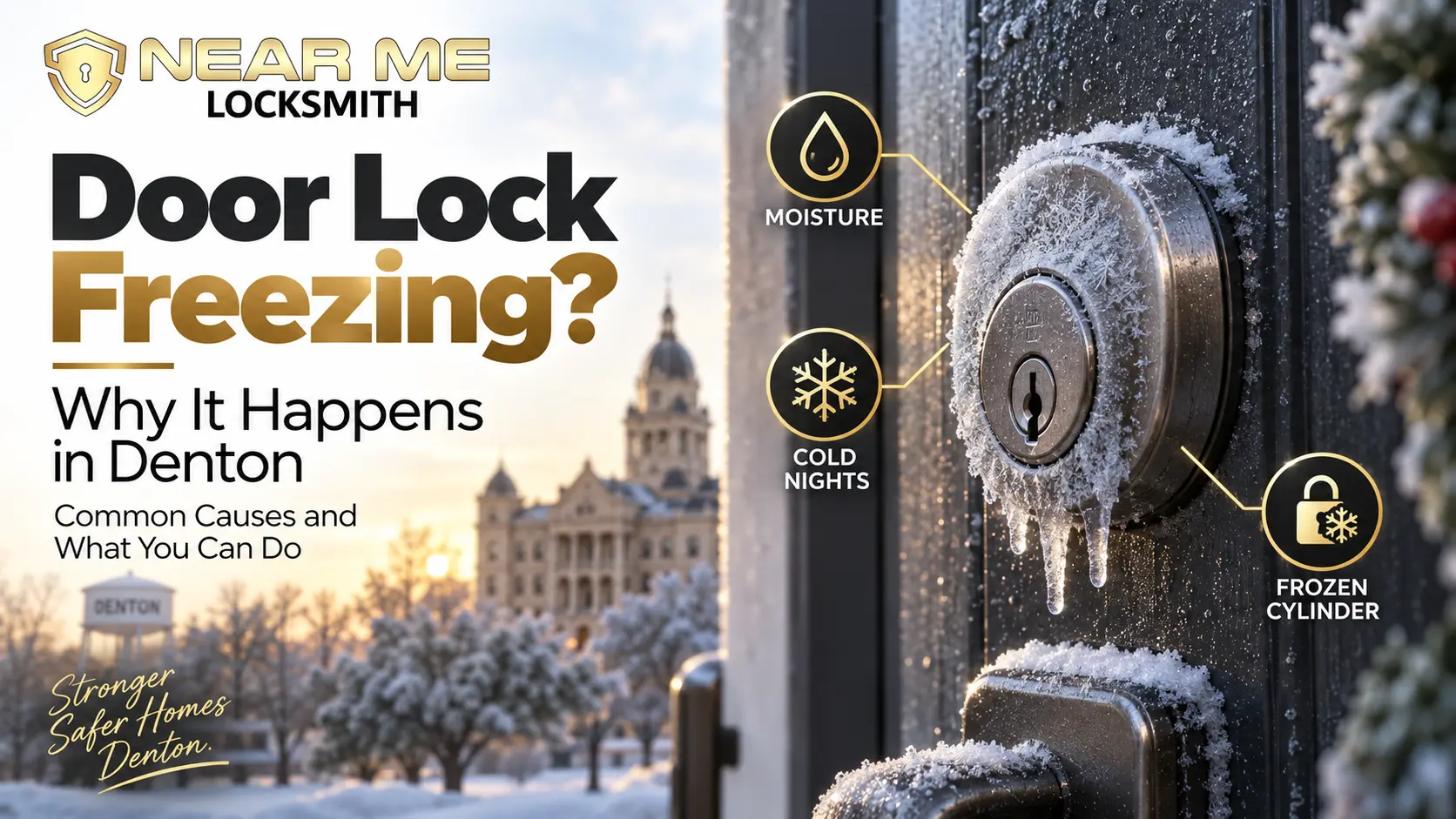
You step outside on a cold Denton morning, key in hand, and your front door lock won’t budge. The key slides in but won’t turn, or worse, it won’t even go all the way in. That’s a frozen lock, and it’s more common here than you’d think.
While Denton doesn’t get Chicago-level cold, we get enough freezing nights and humidity swings to turn door locks into ice cubes. Let me walk you through why this happens and what actually works to prevent it.
Why Door Locks Freeze in Denton Weather
Locks freeze when moisture gets inside the lock cylinder, and the temperature drops below 32°F. Denton’s winter pattern, wet days followed by freezing nights, creates the perfect conditions.
Moisture Entry Points
- Rain and sleet: Water runs down your door and seeps into the keyway, especially on exposed exterior doors
- Humidity: Warm, humid air from inside your home condenses inside the lock when it hits cold metal
- Snow melt: When temperatures fluctuate, snow melts during the day and refreezes at night inside the lock mechanism
Temperature Drops
Once moisture is inside, a temperature drop freezes the water around the pins and cylinder. In Denton, we see this most often between December and February when overnight lows dip into the 20s.
How to Tell If Your Lock Is Actually Frozen
Not every stiff lock is frozen. Here’s how to know the difference:
- The key won’t insert fully, or stops partway
- The key goes in but refuses to turn at all
- You can see frost or ice around the keyhole
- The lock worked fine yesterday but suddenly won’t budge after a cold night
If your lock feels stiff or sticky even in warm weather, that’s a different problem, likely dirt, worn pins, or a failing cylinder. Freezing is almost always weather-related and temporary.
Which Lock Types Freeze Most in Denton
Standard pin-tumbler deadbolts on exterior doors freeze most often because they have exposed keyholes and moving internal parts. Electronic and smart locks usually don’t freeze in the keyhole since there isn’t one, though their batteries drain faster in cold weather. If you’ve been thinking about upgrading, smart locks eliminate the frozen keyhole problem entirely.
Prevention Tips That Actually Work
You can’t stop Denton weather, but you can keep moisture out of your locks.
- Cover the keyhole: A small piece of duct tape or a magnetic keyhole cover blocks rain and snow. Remove it before you need the key.
- Lubricate before winter: Spray graphite powder or dry Teflon lubricant into the keyway in November. Do not use WD-40 or oil-based products; they attract moisture and make freezing worse.
- Install a storm door: This shields your main door lock from direct rain and wind exposure.
- Use your lock regularly: Locks that get used daily are less likely to freeze because the mechanical action clears moisture. If you have a door you rarely use, cycle the lock once a week during winter.
What Not to Do
Never force the key; you’ll bend it or snap it off inside the cylinder. I’ve pulled more broken keys out of frozen locks in January than any other time of year.
Also, don’t pour boiling water on the lock. Yes, it melts the ice, but the water refreezes in minutes, and now you have more moisture inside than before. Pouring hot water on cold metal can also crack the lock housing.
When to Call for Help
If your lock freezes once and thaws out on its own, you’re fine. But if it keeps happening or if the lock still won’t turn after warming up, the internal components might be damaged. Ice expands, and repeated freeze cycles can warp pins or crack the cylinder.
At that point, the lock needs repair or replacement. We keep a full stock of residential locks at our Denton shop and can swap out a damaged cylinder same-day.
FAQ: Frozen Door Locks in Denton
Can I heat my key with a lighter to melt the ice?
Yes, but carefully. Heat the key with a lighter or match, then insert it gently into the lock. The warm metal melts the ice inside. Don’t overheat the key or force it; let the heat do the work.
How long does it take for a frozen lock to thaw on its own?
Usually 20–60 minutes once the temperature rises above freezing. If the sun hits the door directly, it’s faster. Shaded north-facing doors take longer.
Will rubbing alcohol unfreeze a lock?
Yes. Squirt hand sanitizer or rubbing alcohol into the keyway, the alcohol lowers the freezing point and melts the ice quickly. This is one of the fastest non-damaging methods.
Should I replace my lock if it freezes every winter?
Not necessarily. If prevention methods don’t work and the lock is older, upgrading to a weatherproof lock or switching to a keyless entry system makes sense. But freezing alone isn’t a reason to replace a lock, it’s a moisture problem, not a lock defect.
Ready to get started in Denton?
Near Me Locksmith, LLC is here to help with door lock freezing in Denton. Reach out today, and we’ll walk you through your options, answer your questions, and book a time that works for you.
Call (469) 252-1756 or visit Near Me Locksmith, LLC to schedule your Denton appointment.